Fashion campaign art direction in 2026 looks different from the maximalist cycles of the past decade. Luxury and premium brands are pulling back from overloaded sets, anonymous casting, and concept-for-concept's-sake storytelling. The shift is toward clarity: fewer signals, stronger intent, and imagery that customers can connect to product truth.
This is not minimalism as a trend. It is art direction disciplined by brand strategy. When positioning is clear — quiet luxury, craft-led heritage, bold contemporary, or niche subculture — campaign visuals have a filter. Every casting, location, and lighting choice either reinforces that filter or erodes it.
- Is the campaign idea readable in one frame without a press release?
- Does casting reflect the customer the brand actually wants, not only editorial fashion?
- Do materials, fit, and silhouette remain legible under art direction?
- Will this direction scale across lookbook, e-commerce, social, and retail without reinvention?
For Milan-based and European fashion houses, this discipline matters commercially. Buyers, press, and digital audiences all consume campaign imagery faster and across more formats than ever. Coherent art direction reduces explanation cost and strengthens recognition in crowded markets.
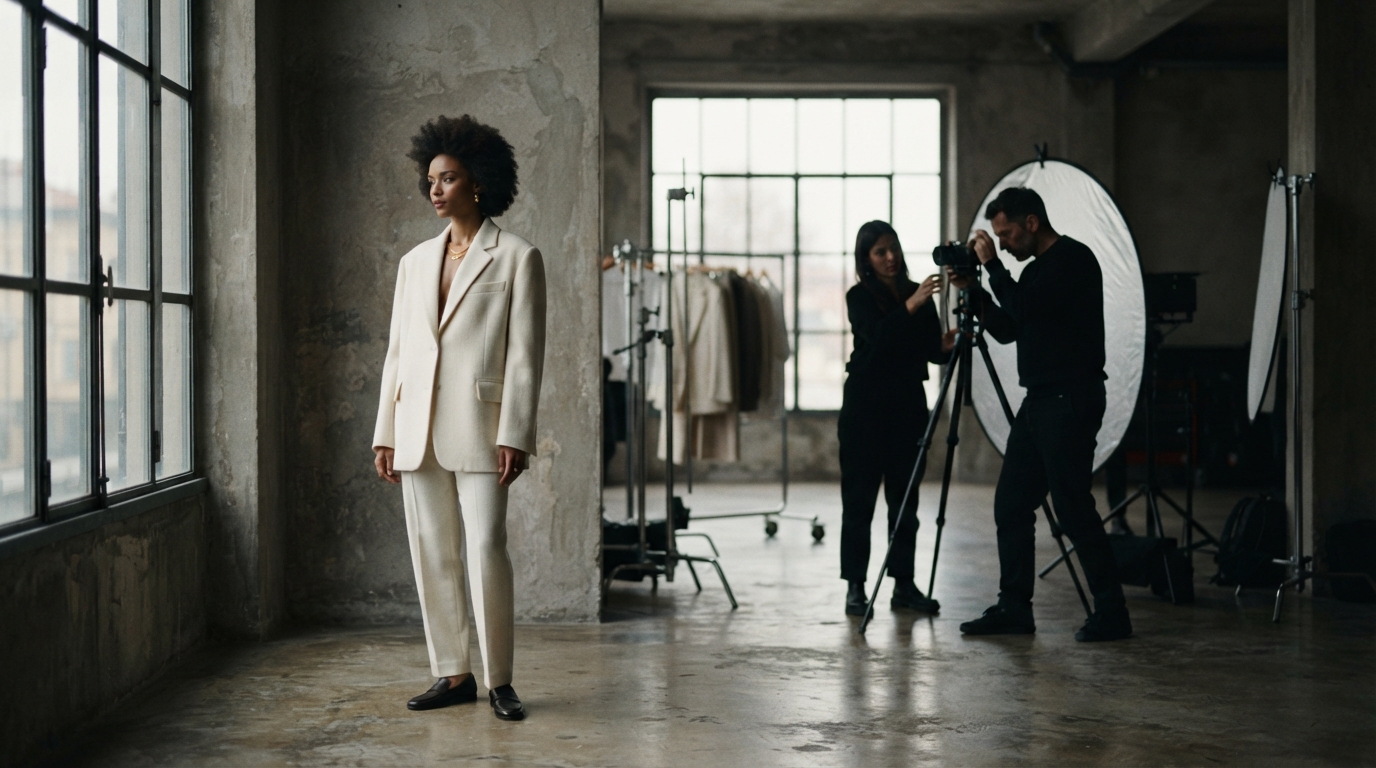
Three directions define luxury campaign art direction in 2026. First, material-first photography: close attention to texture, drape, and finish rather than synthetic perfection. Second, human presence without theatre — casting that feels specific, not interchangeable. Third, environmental restraint — locations and sets that support the garment instead of competing with it.
- Start every campaign brief with positioning and proof points, not mood references alone.
- Build a shot list that prioritises product legibility alongside emotional atmosphere.
- Define a photography grammar — lensing, grain, contrast, cropping — reusable across seasons.
- Align stylists, photographers, and retouchers on what 'premium' means for this house specifically.
- Plan deliverables for every channel upfront so art direction stays consistent post-shoot.
Video and motion follow the same logic. Fashion films in 2026 are shorter, more product-aware, and less reliant on abstract narrative. The best work still feels cinematic — but it does not sacrifice clarity for atmosphere.
- Favour pacing that lets fabric, movement, and detail register on mobile screens.
- Use sound and score with restraint — luxury sound design is often silence, texture, or single instruments.
- Edit for reuse: hero film, cut-downs, stills, and retail loops from one disciplined shoot.
Art direction also intersects with AI-assisted production. Many brands now use generative tools for pre-visualisation, layout variations, or local market adaptations. The risk is homogenisation — campaigns that look technically polished but emotionally interchangeable.
- Use AI to accelerate exploration, not to replace the brand's creative point of view.
- Keep final casting, lighting, and approval decisions with experienced creative directors.
- Maintain a library of on-brand and off-brand visual references for every collaborator.
- Audit AI-assisted outputs for tonal drift before they reach public channels.
The houses gaining attention in 2026 are those whose campaigns feel authored — unmistakably theirs even when the tools are shared industry-wide. That authorship comes from strategy, taste, and consistency, not from bigger budgets alone.
For emerging and independent labels, disciplined art direction is often the fastest route to premium perception. A clear visual system across one strong campaign, one lookbook, and one digital refresh can shift how buyers and customers categorise the brand — sometimes more than a full rebrand.
- Invest in one excellent campaign cycle rather than scattered content throughout the year.
- Document art direction decisions so freelancers and agencies stay aligned.
- Measure impact through sell-in feedback, press pickup, and direct customer recognition — not likes alone.
Campaign art direction in 2026 rewards restraint, specificity, and strategic clarity. The brands that win will not shout the loudest. They will be the easiest to remember.
Planning a campaign that needs stronger art direction and brand alignment? Aleari helps fashion brands shape creative direction, photography systems, and multi-channel rollout with Milan-based expertise.