Growth pushes fashion brands toward new lines: diffusion, accessories-heavy sub-brands, kidswear, home, collaborations, or licensed categories. Brand architecture is the discipline that keeps those moves readable — for customers, wholesale buyers, press, and search systems alike.
When architecture is weak, every extension looks like a discount of the main house. Pricing erodes, storytelling contradicts itself, and partners struggle to explain the portfolio. When architecture is strong, each line has a clear role: who it serves, how it looks, what it costs, and how it connects to the master brand.
- Does each line have a named purpose customers could repeat in one sentence?
- Are visual identity, tone, and price architecture differentiated but recognisably linked?
- Do wholesale decks and e-commerce navigation reflect the same structure?
- Would a new hire understand which line to apply a campaign idea to?
Italian and European luxury groups have long used architecture — main line, couture, diffusion, eyewear, fragrance — as a growth engine. Independent labels now face similar decisions earlier, often with smaller teams. Clarity becomes a competitive advantage.
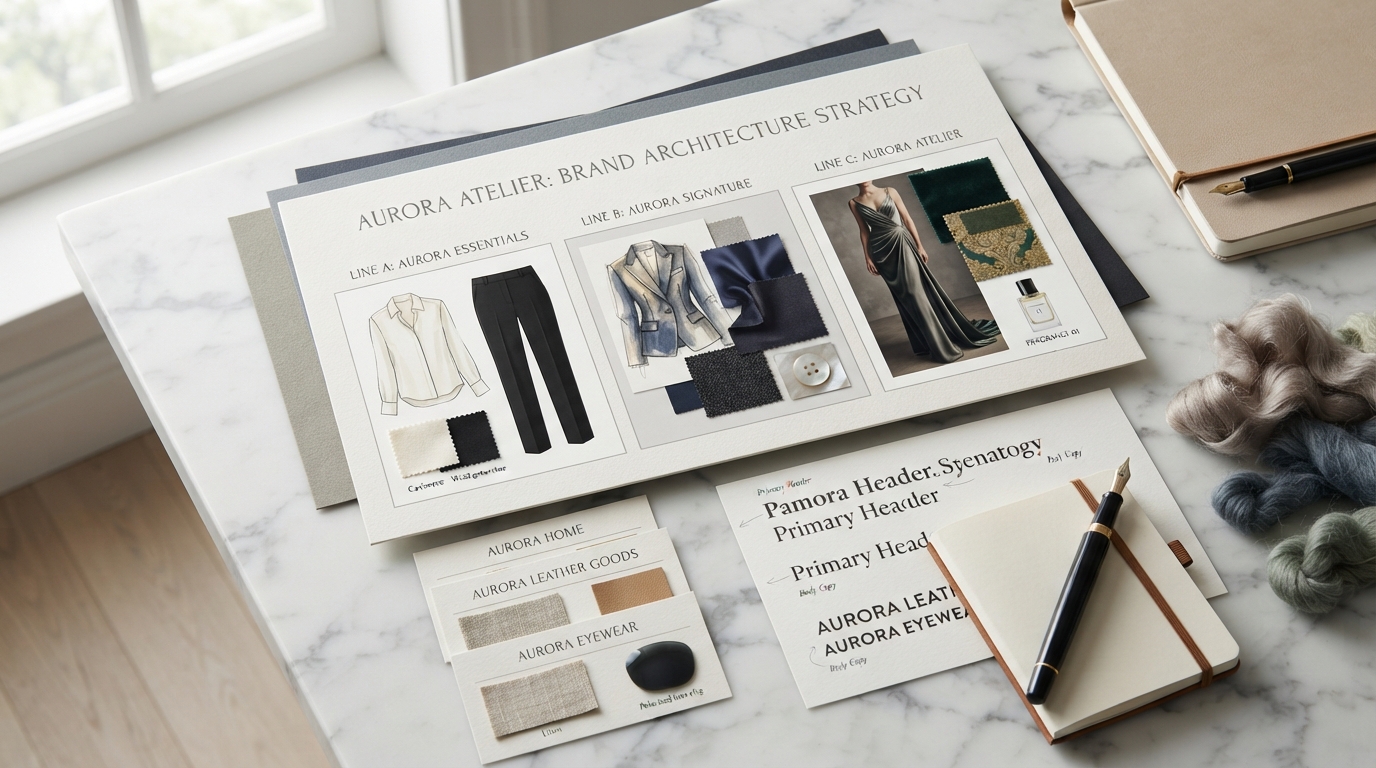
There is no single correct model. Branded house architectures keep one strong master brand with tiered lines. Endorsed architectures give sub-brands more visual independence while borrowing trust from the parent. The right choice depends on positioning, distribution, and how much separation each line needs to protect margin.
- Map current and planned lines against audience, price band, and channel before designing logos or names.
- Define naming rules: what must stay on the master brand, what can stand alone, what belongs only on labels.
- Create identity tiers — typography, colour, photography — that scale from flagship to entry without collision.
- Align architecture with legal and trademark reality early to avoid costly renames later.
- Document architecture in a single internal reference used by design, marketing, sales, and digital teams.
Collaborations and capsules test architecture under pressure. A limited edition should feel like a deliberate chapter, not a random logo swap. Brief partners on what cannot change — material standards, fit philosophy, core narrative — and what can flex for the collaboration story.
- Use consistent URL, metadata, and naming patterns so each line builds searchable entity clarity.
- Avoid launching new sub-brands to fix positioning problems the main line has not solved.
- Review architecture annually as categories and markets shift — architecture is maintenance, not a one-off project.
Wholesale buyers experience architecture through line sheets, showroom zoning, and pricing ladders. If those tools disagree with what consumers see online, sell-in conversations slow down. One coherent architecture story shortens meetings and reduces markdown risk downstream.
- Structure B2B materials to mirror consumer-facing navigation and naming.
- Train sales teams on when to lead with which line for which account type.
- Protect hero line exclusivity — architecture fails when every door carries the same product depth.
- Use architecture to guide inventory and production planning, not only marketing language.
Digital discovery and AI-assisted search reward explicit structure. Brands that clearly separate lines, categories, and price tiers help algorithms and customers understand relevance — vague 'lifestyle' sprawl does the opposite.
For founders considering a second line, the strategic question is not 'can we sell more?' but 'will this line strengthen or weaken what the main brand means?' If the answer requires long explanation, architecture work should come first — not after the lookbook is shot.
- Start with one-page role definitions for every existing and proposed line.
- Test names and visual tiers internally before public launch.
- Measure cannibalisation and margin impact, not only revenue from the new line.
Fashion brand architecture is how growth stays legible. In 2026, the labels gaining trust are those that expand with intention — each line a clear chapter in the same book, not a pile of unrelated covers.
Growing into multiple lines or categories and need clearer brand architecture? Aleari helps fashion houses define positioning, naming systems, and visual hierarchy that scale with the business.